James, a senior consultant, came to us at a transition point. After more than a decade in a large organisation, James decided to start his own consultancy. The launch date was already fixed. The workshops were booked. The first clients were waiting. There was only one problem. The business didn’t have a face.
The side effect of having a website
During our first conversations it became clear that we weren’t only building a website. We were helping shape how James would present his new consultancy to the world. For years, James had been associated with the organisation he worked for. Now he needed a confident way of introducing himself to people under a business name of his own.
Looking back on our time together, here is how James describes the biggest takeaway:
Its so amazing to be able to stand up in front of a room of people there for a workshop with me OR online and have a consistent brand and visual identity that is congruent with my work.”
James Longwell (Lumenise, UK)
Launching a consultancy, one step at a time
Together with my collaborators, a brand designer (Kristina) and SEO strategist (Austea), we spent the following weeks shaping the foundations of James’s new consultancy. Our weekly calls throughout April became a trail of stepping stones.
This story sheds light on those steps. If you’re someone in long-term employment considering a business path, read on. Perhaps this post will inspire you to take a leap into entrepreneurship.
So let’s start with the beginning of the story…
Discovery phase: framing the business
Time was ticking. James arrived at our Zoom workshop with an AI-generated logo. And this was a great place to start. A visual always makes it easier to kick off the conversation. It turned out the logo carried a hidden meaning, a symbol of James’s core method of people development (Transactional Analysis). In the discovery phase of the project, we look for specific examples of what makes the business unique. If you’re starting your own consultancy, you may also want to pause here and ask yourself “What is my toolbox? How do I work with clients?”
For James, it was the humanistic principles of Transactional Analysis: people are OK, everyone has a capacity to think and people have the autonomy to change decisions.
From this first conversation, the remaining pieces of James’s business began to fall into place. Every week, we met online. Each conversation had a single focus, audience, competitors, positioning, visual identity, or website structure. Instead of trying to solve everything at once, we moved one decision at a time.
One conversation clarified the profiles of target audiences. Another defined the scenarios of when the specific type of clients reach out to James. Getting a bit technical here. Don’t worry. It’s much easier to explore in conversation! “It’s really good to be able to speak it out. And just say, does that sound right?” said James after our first workshop. This way, little by little, the business stopped living inside notes and ideas. It became something visible.
I particularly appreciated the workshops they organised and the probing questions they asked which really helped me refine my brand and positioning.”
James Longwell, Lumenise (UK)
Building phase: bringing it together
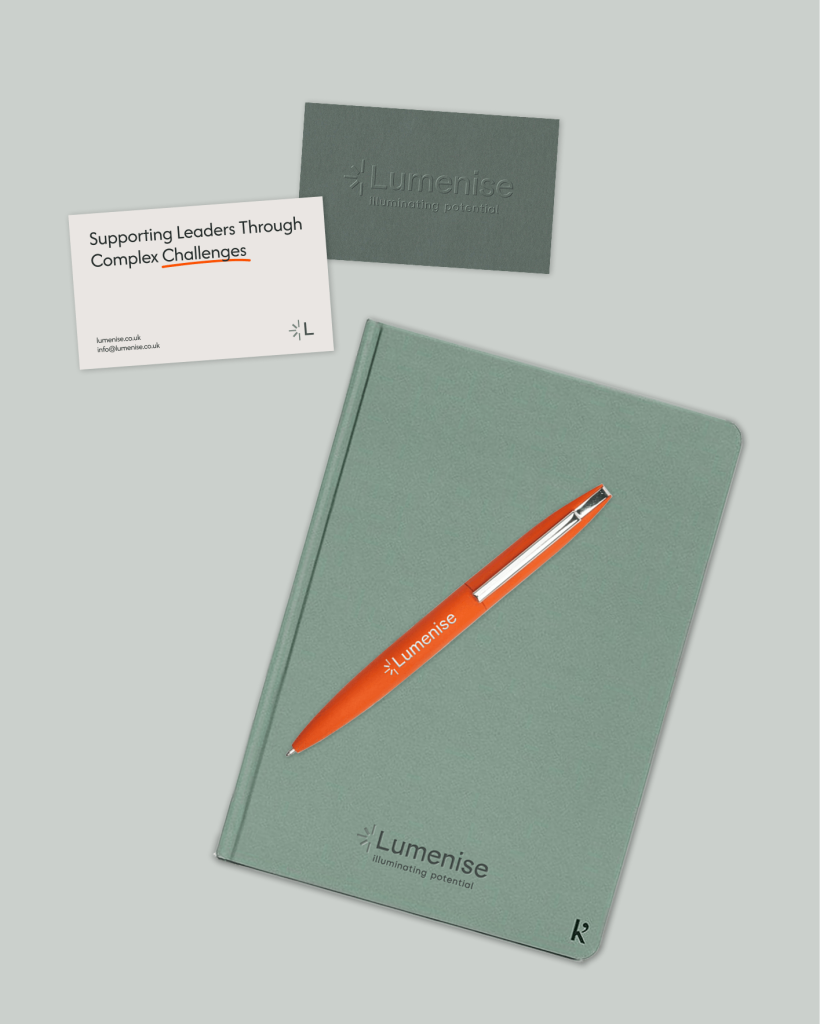
Once the website structure and content had been refined together, we moved into building the final brand assets and website. “It was certainly a lot more than a logo”, said James, surprised about the branding decisions he made together with our designer Kristina.
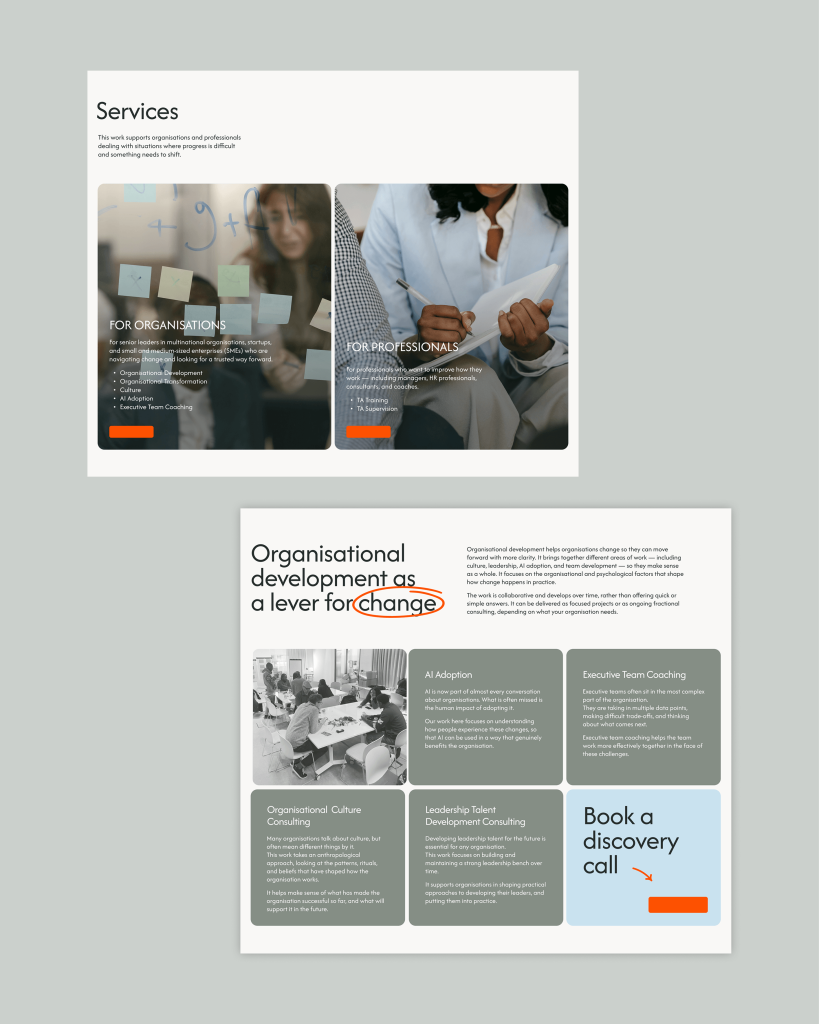
Like many solo business owners, James came looking for a website. What emerged was something broader: a visual identity, a clearer way to explain his work and a website that brought everything together. “A phenomenal job turning around the conceptualisation, design and launch in a compressed timescale. (Top tip to others at the same stage – give yourself more time!),” said James during launch.
The website launch became a natural milestone in starting the business. The consultancy finally had a face that matched the expertise behind it.
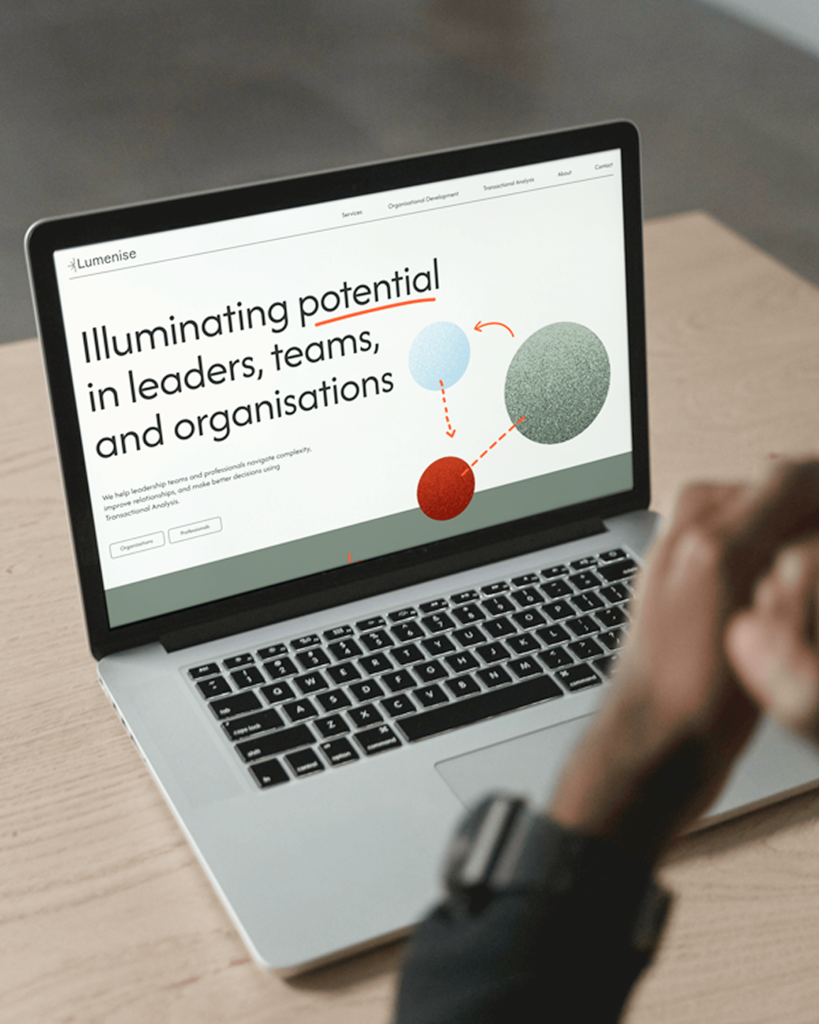
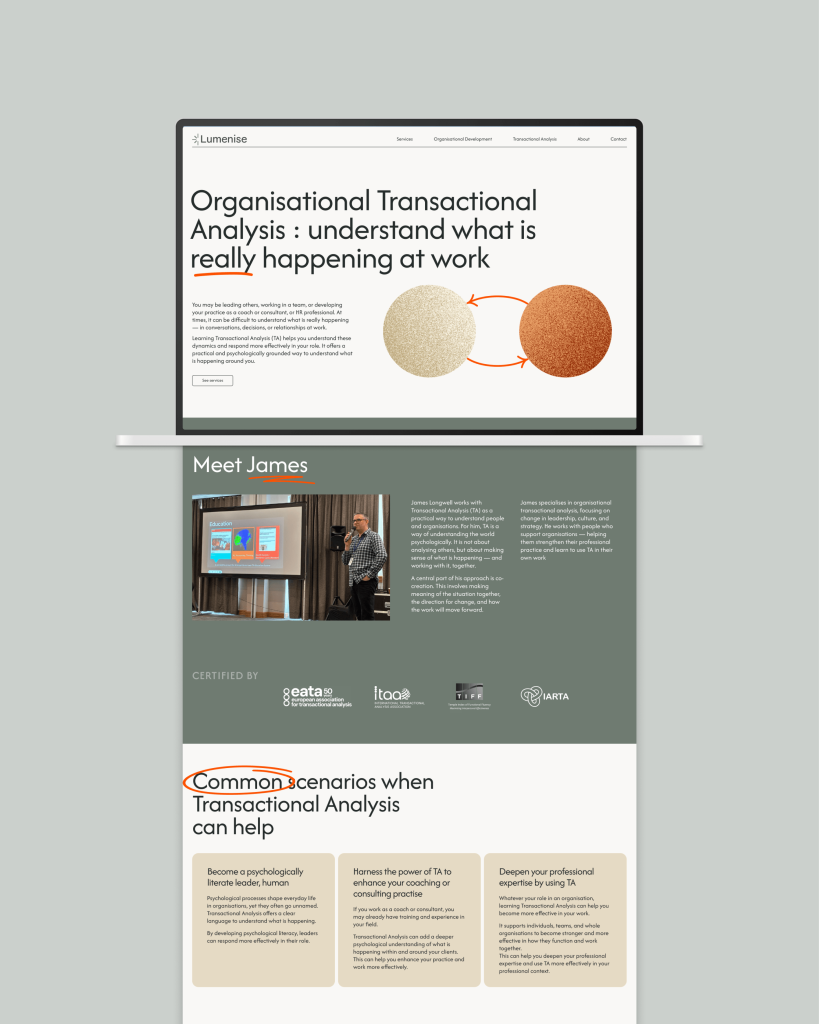
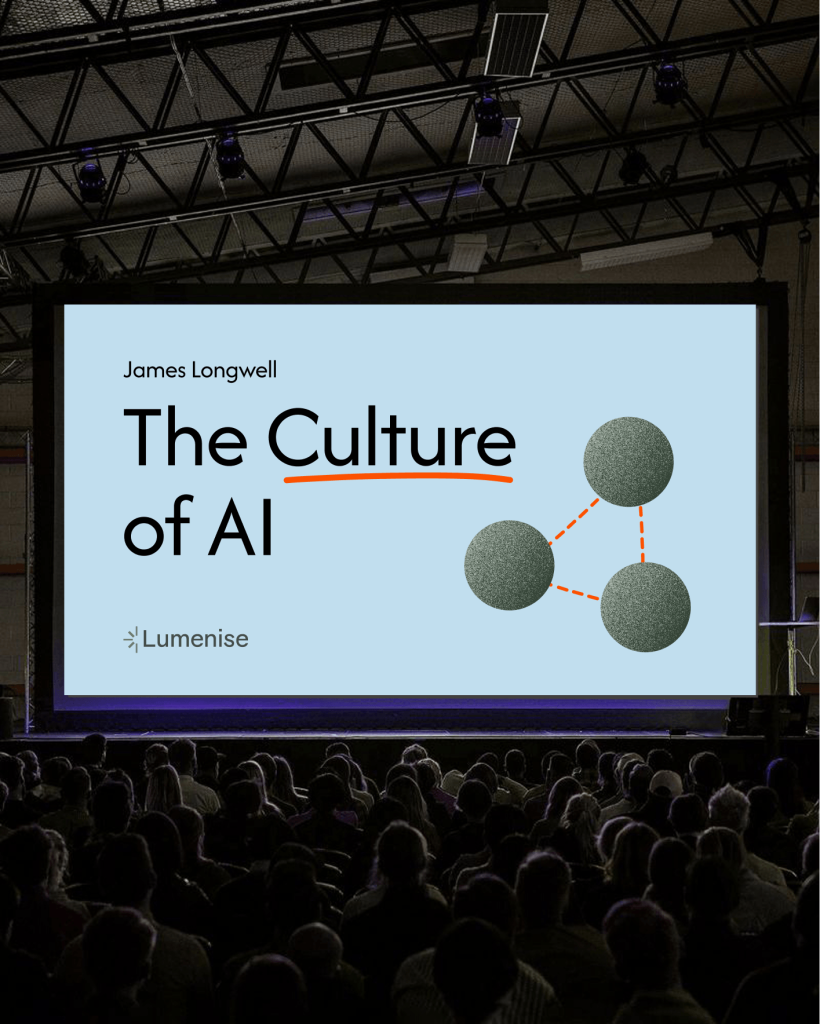
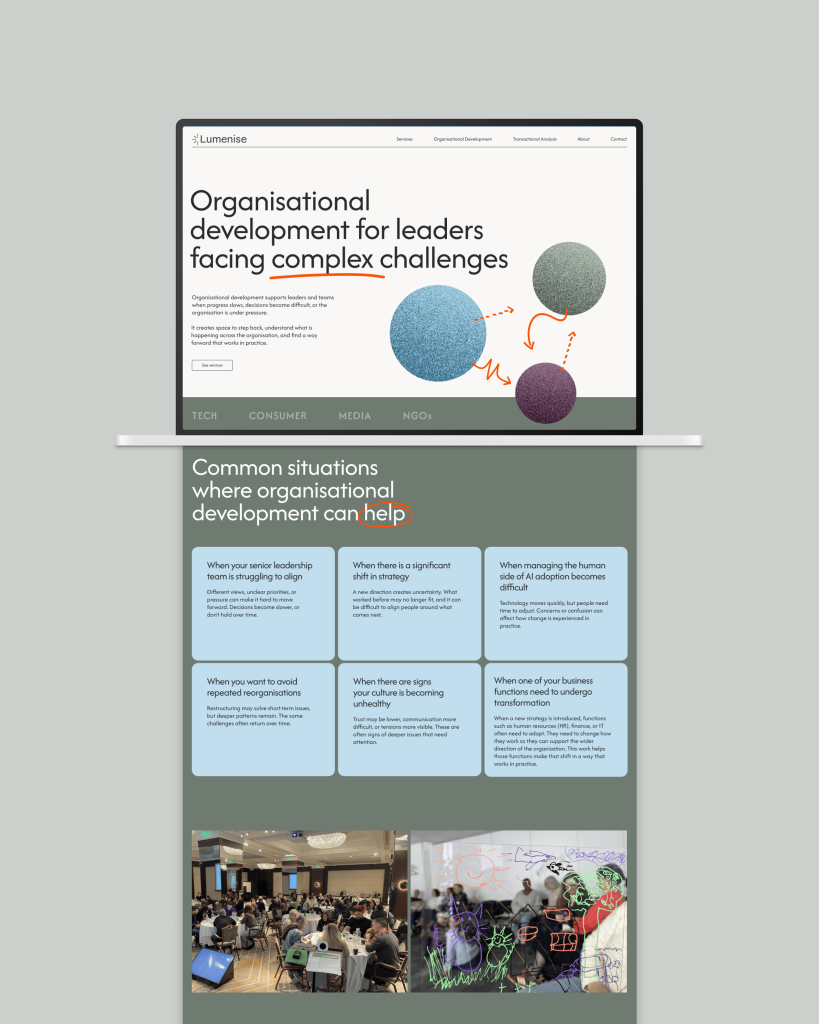
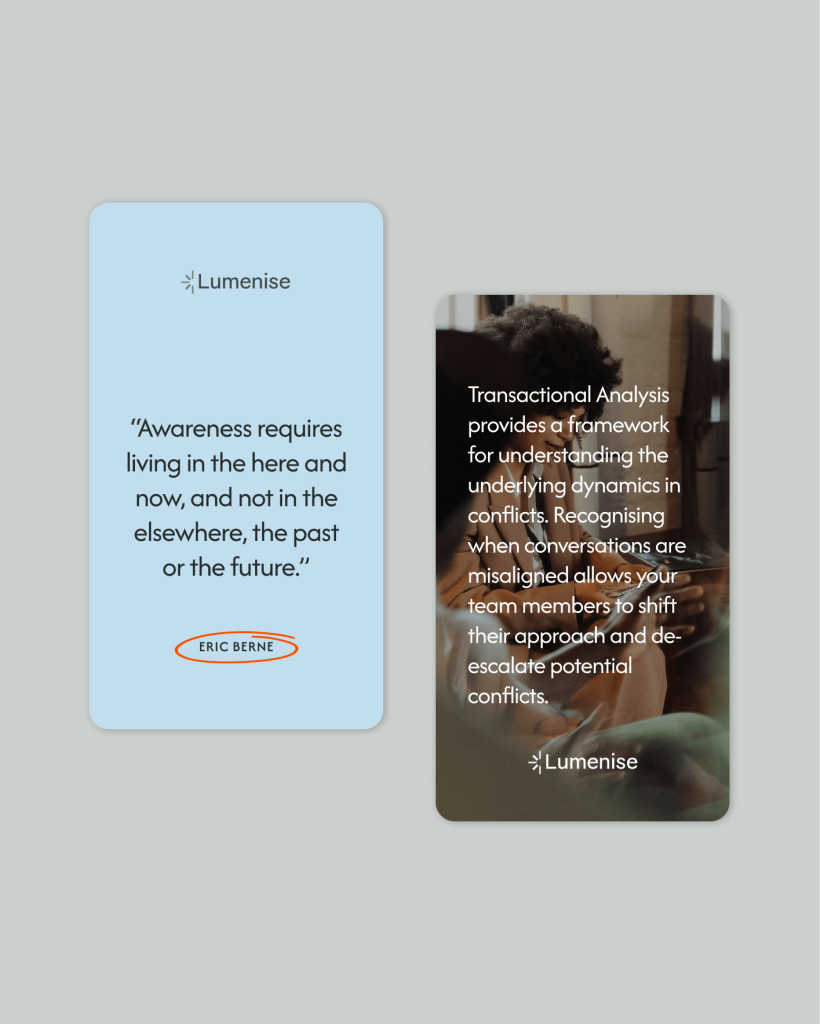
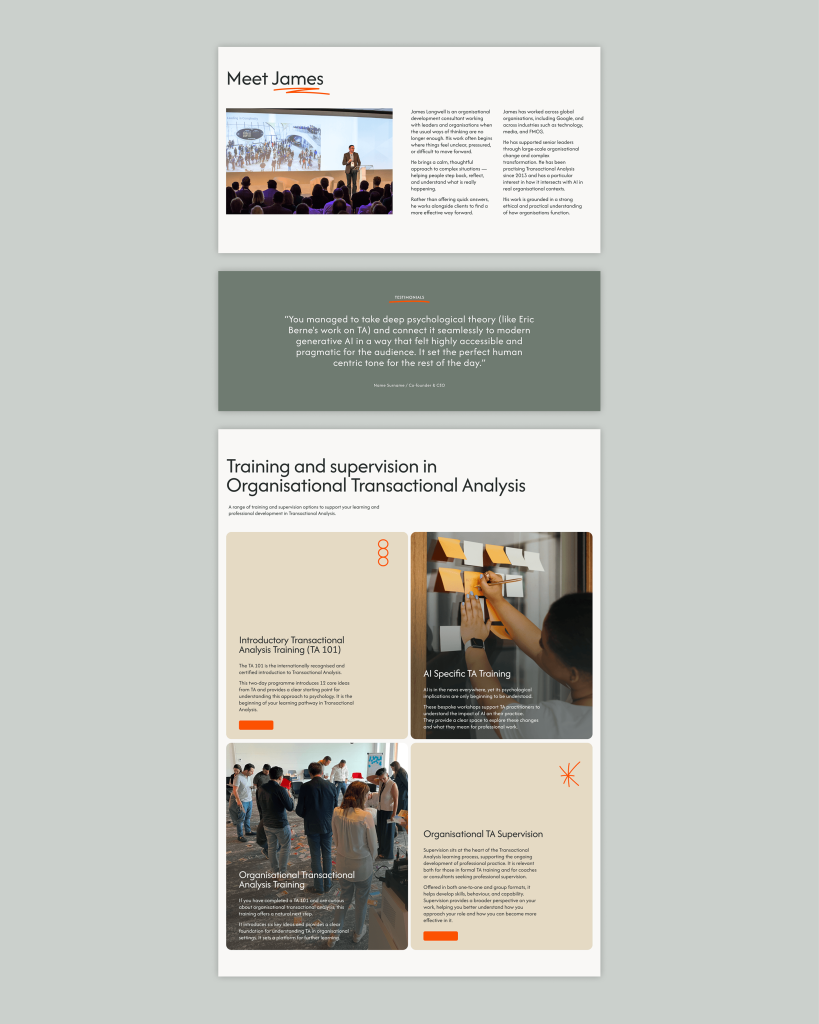
Here is a snapshot of what the finals looked like:

Human conversation as a way to build a website
Six weeks earlier, James thought he needed a website. He left with a business that finally had a face. One that felt consistent with the work he had already been doing for years.
That’s why every project at Ogiziu begins the same way, with a conversation. Because before building a website, we first need to hear the story. Together, we decide what belongs, what doesn’t and what deserves to stand at the centre. Websites then help people recognise the expertise that’s already there and needs to be captured.
If you’re preparing to launch your own business, I hope James’s story encourages you to begin. Whether you build your website yourself or work with a design studio, give yourself the space in the calendar for reflection and consistent steps.
Perhaps the first step in getting a website for your new consulting business might be going for a walk with a question: What is my toolbox?